
Egypt - Practical Information
Practical Tips and Insights for a Smooth Egyptian Journey
Egypt is a land of ancient wonders, vibrant traditions, and dramatic scenery. From the timeless Pyramids of Giza to the lively souks of Cairo, an unforgettable visit begins with thoughtful preparation. This guide will help you navigate the essentials, so you can make the most of your Egyptian adventure.
Before You Go
Passport and Visa: Make sure your passport is valid for at least six months beyond your arrival. Most travellers need a visa (US$25), which can often be obtained on arrival at major airports or online through Egypt’s e-visa portal. Double-check requirements for your nationality before departure.
Vaccinations and Health: Hepatitis A, typhoid, and routine vaccinations are recommended. Consider travel insurance that covers medical emergencies. Pharmacies are widespread but bring any personal medications. If you need medical attention, private clinics in cities are generally reliable. Tap water is not safe to drink, so stick to bottled or filtered water, and be cautious with street food if you have a sensitive stomach.
Money Matters: The local currency is the Egyptian pound (EGP). Take a combination of cash and cards—ATMs are common in cities, less so in remote areas. US dollars, euros, and British pounds may be accepted in tourist centres, but local currency is needed for most purchases.
Electricity: Egypt uses 220V supply voltage and types C and F plug sockets (like much of Europe). Bring a universal adapter if your devices use different plugs or voltages.
Clothing: Modest dress is appreciated, especially outside resorts and in religious sites. Lightweight, breathable fabrics are ideal due to the heat, but bring garments to cover your shoulders and knees when required.
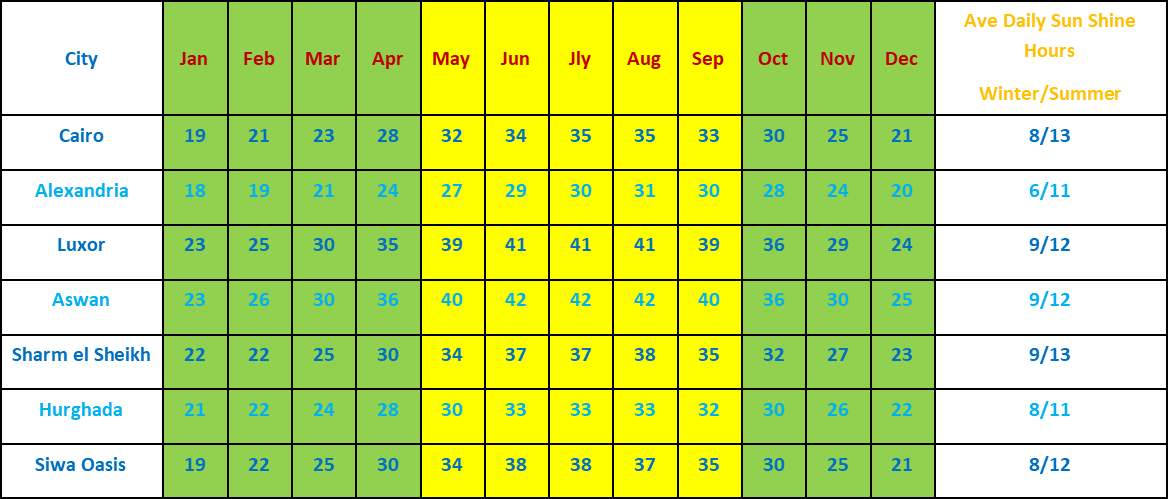
Weather: Summers (May–September) are extremely hot—especially in Upper Egypt and the desert—while winters are mild with cooler nights. (See table below.) Prepare for intense sun with hats, sunglasses, high-SPF sunscreen, and a refillable water bottle. Plan to rest or do indoor activities during the hottest part of the day.
Language: Arabic is the official language; English is widely spoken in tourist zones. Learning a few basic phrases will be appreciated and can help in daily exchanges.
Time Zone: Egypt operates on Eastern European Time (EET), which is UTC+2 hours. The country does not observe daylight saving time, so this time zone remains constant throughout the year.
Upon Arrival and During Your Stay
Getting Around: Taxis, Uber, and Careem are convenient for getting around cities. The Cairo Metro is efficient. For intercity journeys, you’ll find trains and domestic flights. Allow extra time for traffic in Cairo.
Personal Safety: Tourist areas are generally safe, but be mindful of pickpockets and scams, especially in crowded places. Avoid political demonstrations and follow local guidance. Register with your embassy if you’re staying for an extended period.
Cultural Etiquette: Familiar greetings such as “Salam Alaikum” are welcomed. Public displays of affection are discouraged, and always ask permission before photographing people. During Ramadan, eating, drinking, or smoking in public during the day is best avoided.
Religious Sites: Dress conservatively and remove shoes before entering mosques. Fridays are the Islamic holy day, and many attractions and businesses may close or have reduced hours.
Tipping (Baksheesh): Tipping is a common part of Egyptian culture and expected for many services, including hotel staff, drivers, and guides. Small change (1–10 EGP) is useful for tips in cafés, restrooms, and daily transactions. In restaurants, 10–15% is customary if service isn’t already included in the bill.
Suggested Tipping Amounts
Guides: 50–100 EGP per person, per day, depending on your satisfaction and the length of your tour.
Drivers: 20–50 EGP per person, per day.
Porters: 10–20 EGP per bag is customary when they help with luggage in hotels or at airports.
Hotel Maids: 10–20 EGP per night, left daily in your hotel room.
Restaurant Staff: If service is not already included, tip 10–15% of the bill. In small cafés or for takeaway, rounding up or leaving small change (5–10 EGP) is appreciated.
Mobile Phones and WiFi Connectivity
Mobile phones work well in Egypt, and coverage is generally good in urban areas and tourist destinations. You can easily purchase a local SIM card at the airport or in city shops for affordable calls and data.
WiFi is widely available in hotels, hostels, cafés, and restaurants in larger cities and tourist resorts. However, speeds can be inconsistent, and rural areas may have limited connectivity. For uninterrupted internet, a local data SIM card or portable WiFi device is recommended.
Many apps, including ride-hailing and translation, can help you navigate and communicate during your trip.
Photographing Local People
While Egypt is a visually stunning country, it is important to respect personal boundaries when photographing local people. Always ask for permission before taking someone’s photo, especially in rural areas or traditional communities. Many Egyptians appreciate being asked and may refuse if they are uncomfortable.
Photography is usually fine in public and tourist areas, but avoid taking pictures of military personnel, government buildings, police, and security checkpoints.
Some religious sites may have restrictions on photography, so check the rules or ask staff before snapping photos inside mosques, churches, or tombs.
Be discreet and courteous, and respect local customs regarding privacy and modesty.
Personal Health Safety and Water Drinking
Water Safety: Tap water in Egypt is not considered safe for drinking. Always opt for bottled or filtered water, and make sure the seal is unbroken before purchasing. Use bottled water even for brushing your teeth, and avoid ice in drinks unless you are certain it was made with purified water.
Food Hygiene: Stick to hot, freshly cooked meals. While Egyptian cuisine is a highlight of any visit, be cautious with raw fruits and vegetables unless they have been peeled or washed with purified water.
Heat Protection: Egypt’s climate can be extremely hot, especially in summer. Stay hydrated by drinking water regularly, wear loose-fitting, light-coloured clothing, and protect yourself from the sun with hats and sunscreen.
Medical Support: Pharmacies are widely available in urban areas, and private clinics generally offer good standards. It is wise to carry a basic first aid kit and any personal medications you may need.
Health Emergencies: Comprehensive travel insurance is highly recommended to cover any medical emergencies. In case of illness or injury, go to a reputable private clinic or hospital, and contact your embassy if necessary for assistance.
Opening Hours and Working Hours
General Businesses: Shops and markets typically open from around 10:00 to 22:00, although hours may be shorter during religious holidays or Ramadan.
Banks: Banks are generally open from Sunday to Thursday, 8:30–14:00. They are closed on Fridays and Saturdays.
Tourist Sites: Major attractions open daily, often from 8:00 or 9:00 until 16:00 or 17:00. Check specific sites for variations, especially during Ramadan or national holidays.
Final Tips
Carry small change for tips (“baksheesh”), which are expected for many services.
Schedule downtime during the hottest hours of the day.
Respect local customs, especially during Ramadan and at religious sites.
Stay informed about local news and government travel advisories.
With a little preparation and cultural awareness, Egypt promises a journey filled with history, hospitality, and unforgettable experiences. Safe travels!
Weather: Average max daily temperature (Centergrade)
Please use the link below for further advice on travelling to Egypt provided by the UK Foriegn Office:
Jordan - Practical Information
A Guide for a Smooth Journey to Jordan
Introduction
Jordan’s tapestry of history, culture, and natural wonders makes it a rewarding destination for every traveller. To ensure a seamless journey, these practical tips and insights will help you arrive prepared and ready to enjoy all Jordan has to offer.
Before You Go
Visa Requirements: Most nationalities, including British citizens, can obtain a visa on arrival at airports and border crossings. (Cost approx. GBP£42.00) Always check the latest regulations before your trip.
Travel Insurance: Secure comprehensive travel insurance that covers medical emergencies, accidents, and theft. Quality health facilities are available in urban areas, but insurance gives extra peace of mind.
Currency: The Jordanian Dinar (JOD) is the currency in use. While ATMs, credit cards, and banks are abundant in cities, small towns and markets may require cash.
Vaccinations: Keep up to date with routine vaccinations. Additional protection against Hepatitis A and Typhoid is often recommended; consult your healthcare provider for personalised advice.
Language: Arabic is Jordan’s official language, but English is widely spoken in tourist settings. Picking up a few basic Arabic phrases will enrich your travel experience.
Getting There and Around
Flights: Queen Alia International Airport in Amman is the main international gateway. Direct flights are available from the UK and other countries, with taxis and buses connecting arrivals to the city.
Transport Within Jordan: Taxis and public buses are easy to find. For greater flexibility, consider renting a car—especially when visiting Petra or the deserts of Wadi Rum. Always familiarise yourself with local driving laws.
Navigation: Navigation apps such as Google Maps are reliable, though some signage is only in Arabic. Plan your route ahead to avoid confusion.
Accommodation and Food
Where to Stay: Options range from luxury hotels in Amman to friendly guesthouses in Petra and atmospheric desert camps in Wadi Rum. Reserve in advance during busy spring and autumn periods.
Food and Water: Jordanian cuisine offers delights like mansaf and falafel, with street food available in most towns. Tap water is generally not recommended for drinking; use bottled water for hydration and brushing teeth. Many shops and hotels provide bottled water, and it’s wise to have a supply for excursions. Be cautious with ice, as it may be made from tap water. Freshly prepared food from reputable restaurants is usually safe.
Cultural Etiquette
Dress Code: Jordan is a culturally conservative country, so dressing modestly is important, especially when visiting religious sites or rural communities. Women should cover their shoulders and knees, and it's often appreciated to wear long skirts or trousers and loose-fitting tops. Men should avoid shorts in public settings and opt for long trousers and shirts with sleeves. In tourist areas, dress codes are more relaxed, but respectful attire is always best. Consider lightweight, breathable fabrics to stay comfortable in Jordan’s climate. Sunglasses and hats are also recommended to shield against the strong sun.
Respect Local Customs: Jordanian hospitality is renowned. Simple greetings, such as “As-salamu alaikum”, are well received. Avoid public displays of affection, which are discouraged in Jordanian culture.
Photography: Always ask before taking photos of people, especially in rural areas or at religious sites.
Tipping
Tipping, or “baksheesh,” is a common practice in Jordan, though it is not always mandatory. Understanding when and how much to tip can enhance your travel experience and show appreciation for good service. This guide provides practical advice for British travellers on tipping etiquette in Jordan.
General Guidelines
Tipping is appreciated but not obligatory in most situations.
Small denominations of Jordanian dinar (JOD) are useful for tipping.
Tipping is generally done in cash and handed directly to the individual.
Restaurants and Cafés
In mid-range and upmarket restaurants, a service charge of 10% is often added to the bill. If not, it’s customary to leave 10% of the total bill.
In casual eateries or cafés, rounding up the bill or leaving small change (around 1–2 JOD) is sufficient.
Hotels
Porters: 1 JOD per bag.
Housekeeping: 1–2 JOD per night, left in the room at the end of your stay.
Concierge: 2–5 JOD if they have provided special assistance or arranged something extra for you.
Taxis and Transport
Taxi drivers do not expect a tip, but rounding up to the nearest dinar is appreciated.
For private drivers or guides, 5–10 JOD per day is appropriate, depending on the level of service.
Tours and Guides
Group Tour Guides: 2–3 JOD per person per day.
Private Guides: 5–10 JOD per day.
Drivers: 2–5 JOD per day.
Other Situations
Public Toilets: It is common to leave a small tip (0.5–1 JOD) for attendants.
Spas and Salons: 10% of the bill or as you feel appropriate.
Safety and Security
General Safety: Jordan is considered safe for visitors. Use common sense—keep valuables secure and avoid isolated areas at night.
Health: Pharmacies are widespread, and urban medical care is reliable. Carry any necessary prescription medication and a basic travel health kit.
Local Laws: Familiarise yourself with local laws, and avoid discussing sensitive political topics.
Practical Insights
Connectivity: Affordable SIM cards are available at the airport and in shops. Wi-Fi is common in hotels, though coverage can be patchy in remote regions.
Bargaining: Haggling is part of the culture in markets. Engage with vendors politely and always bargain with a smile.
Time Zone: Jordan operates on UTC+2. Adjust your devices and plans accordingly.
Electricity: The local voltage is 230V, with plug types C, D, F, G, and J. Bring a suitable adaptor to charge your devices.
Conclusion
With these insights—especially on safe hydration and respectful attire—you’ll be well-equipped to appreciate Jordan’s wonders in comfort and confidence. Wishing you an unforgettable journey!
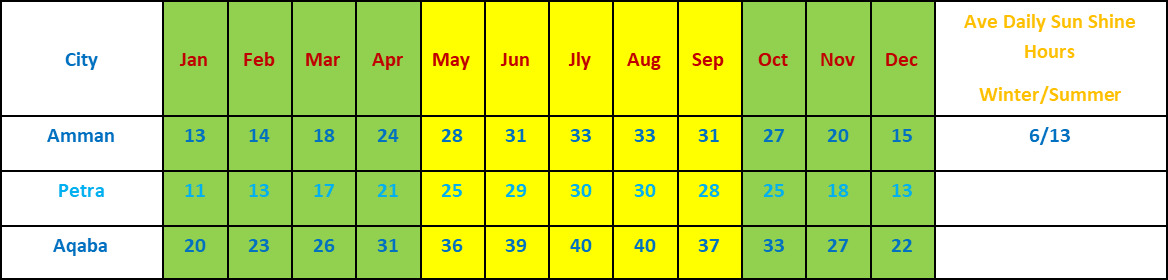
Weather: Average max daily temperature (Centergrade)
Please use the link below for further advice on travelling to Jordan provided by the UK Foriegn Office: