
Luxor
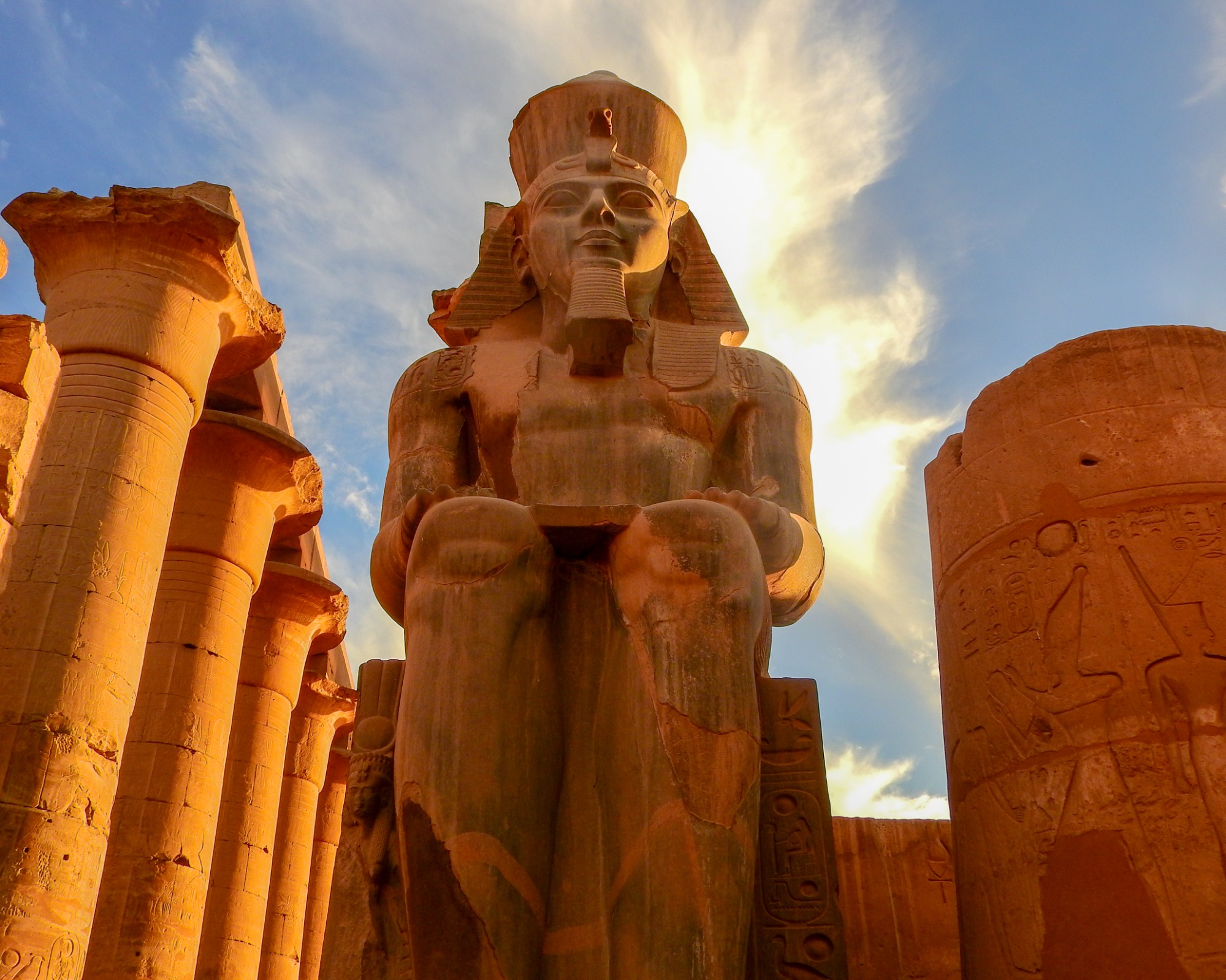
Luxor Temple (Click on to Expand)
Quick Links to on Page Topics:
The Timeless Heart of Ancient Egypt
Nestled on the banks of the majestic River Nile, Luxor is often referred to as the world's greatest open-air museum. With a history that stretches back thousands of years, this vibrant city in Upper Egypt provides an unparalleled glimpse into the wonders of ancient civilisation while offering modern comforts and warm hospitality.
Luxor is renowned for its breathtaking archaeological sites, including the legendary Valley of the Kings, where pharaohs such as Tutankhamun found their final resting place. The city's east bank is home to the magnificent Karnak and Luxor Temples, which stand as testaments to Egypt's architectural prowess and spiritual heritage. As you wander among soaring columns and intricately carved hieroglyphs, you’ll feel transported to a time when gods and mortals mingled in the shadow of these colossal monuments.
A visit to Luxor is more than a journey through the remnants of a glorious civilisation—it's an adventure that will enrich your understanding of history and Egyptian culture. Whether you're an avid historian, a keen photographer, or simply in search of awe-inspiring beauty, Luxor welcomes you with open arms and endless stories to tell.
Luxor's East Bank
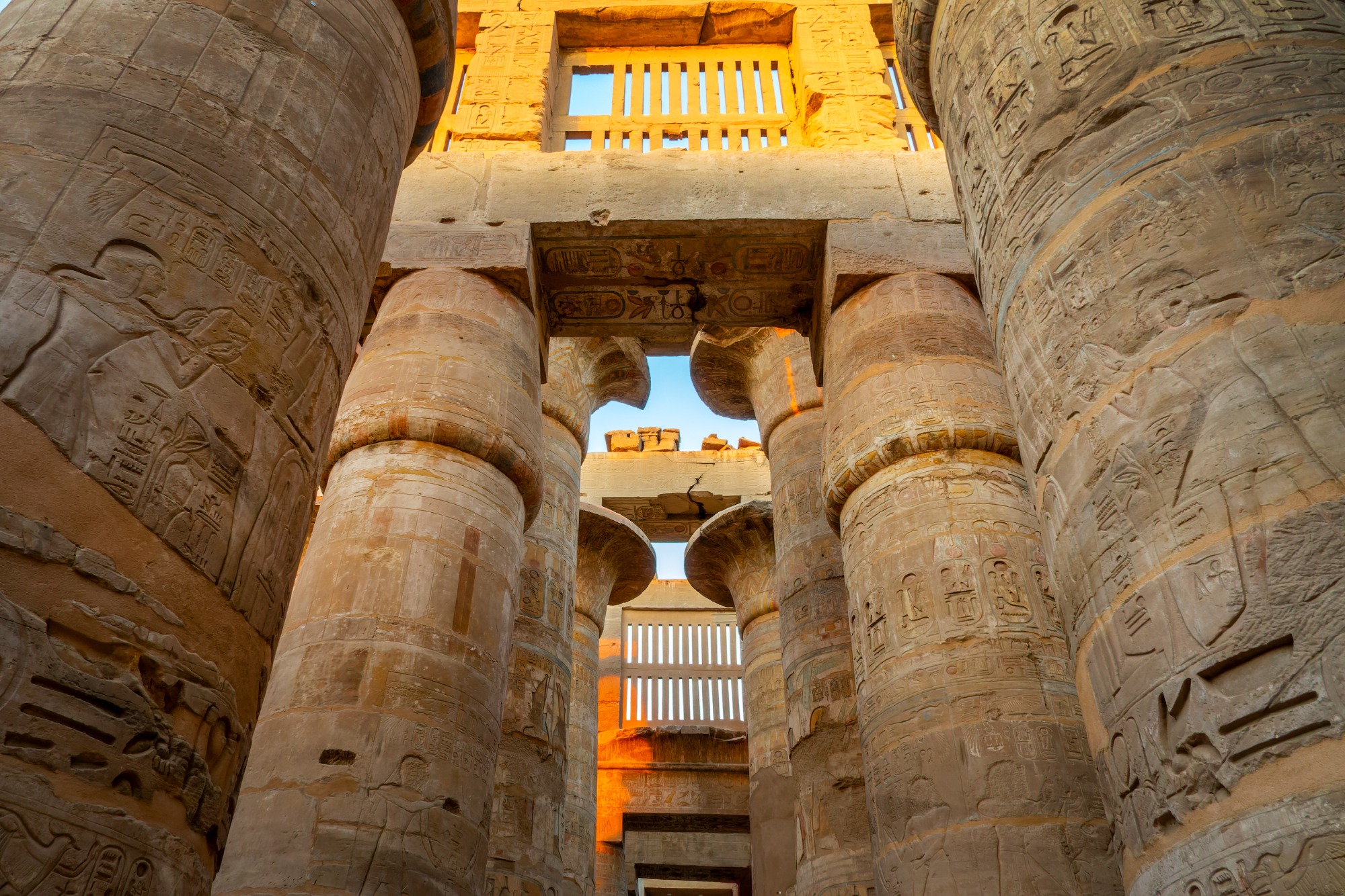
Great Hypostyle Hall - Temple of Karnak (Click on to Expand)
Luxor’s East Bank beckons travellers with its mix of timeless wonders and lively modern culture. Whether you’re tracing the steps of pharaohs, cruising the Nile, or simply soaking up daily life, every moment here promises to be unforgettable.
Luxor’s East Bank is the city’s vibrant centre, where ancient history and lively modern culture blend beside the Nile’s graceful expanse. Dominating the landscape, the Karnak Temple complex is one of the most awe-inspiring sights in Egypt and the world. Spanning over 100 hectares, Karnak is a monumental collection of sanctuaries, pylons, chapels, and obelisks built over more than two thousand years. Its famous Hypostyle Hall, with 134 giant columns rising skyward, invites visitors to wander beneath its forest of stone and marvel at hieroglyphic inscriptions that chronicle the exploits of pharaohs. The Sacred Lake, Avenue of Sphinxes, and intricately carved reliefs offer endless opportunities to immerse yourself in the grandeur and ritual of ancient Egyptian religion.
Not far away, Luxor Temple stands as a testament to the power and artistry of the New Kingdom. Unlike Karnak, Luxor Temple was dedicated to the rejuvenation of kingship and the annual Opet Festival. Its impressive colonnades, massive statues of Ramses II, and the beautifully illuminated courtyard at dusk create an atmosphere both majestic and intimate. At night, the temple’s soft lighting transforms its sandstone walls into a golden canvas, revealing the faces of deities and rulers whose legacy endures to this day.
For those eager to delve deeper into Luxor’s storied past, the East Bank’s museums offer captivating collections and expertly curated exhibits. The Luxor Museum is a highlight, displaying treasures unearthed from local excavations—finely crafted statues, ceremonial artefacts, and intricately adorned jewellery that reveal the artistic achievements of the pharaohs. The Mummification Museum, meanwhile, uncovers the fascinating science and sacred rituals behind ancient Egypt’s burial practices, with detailed explanations and rare funerary objects on display. These institutions provide a richer context to the temples and tombs, inviting travellers to engage with Egyptian history in a personal and profound way.
From architectural marvels and riverside relaxation to vibrant street scenes and culinary delights, Luxor’s East Bank offers a wealth of experiences that promise to enchant every traveller.
Area Highlights:
- The Temple of Karnak
- The Temple of Luxor
Luxor's West Bank
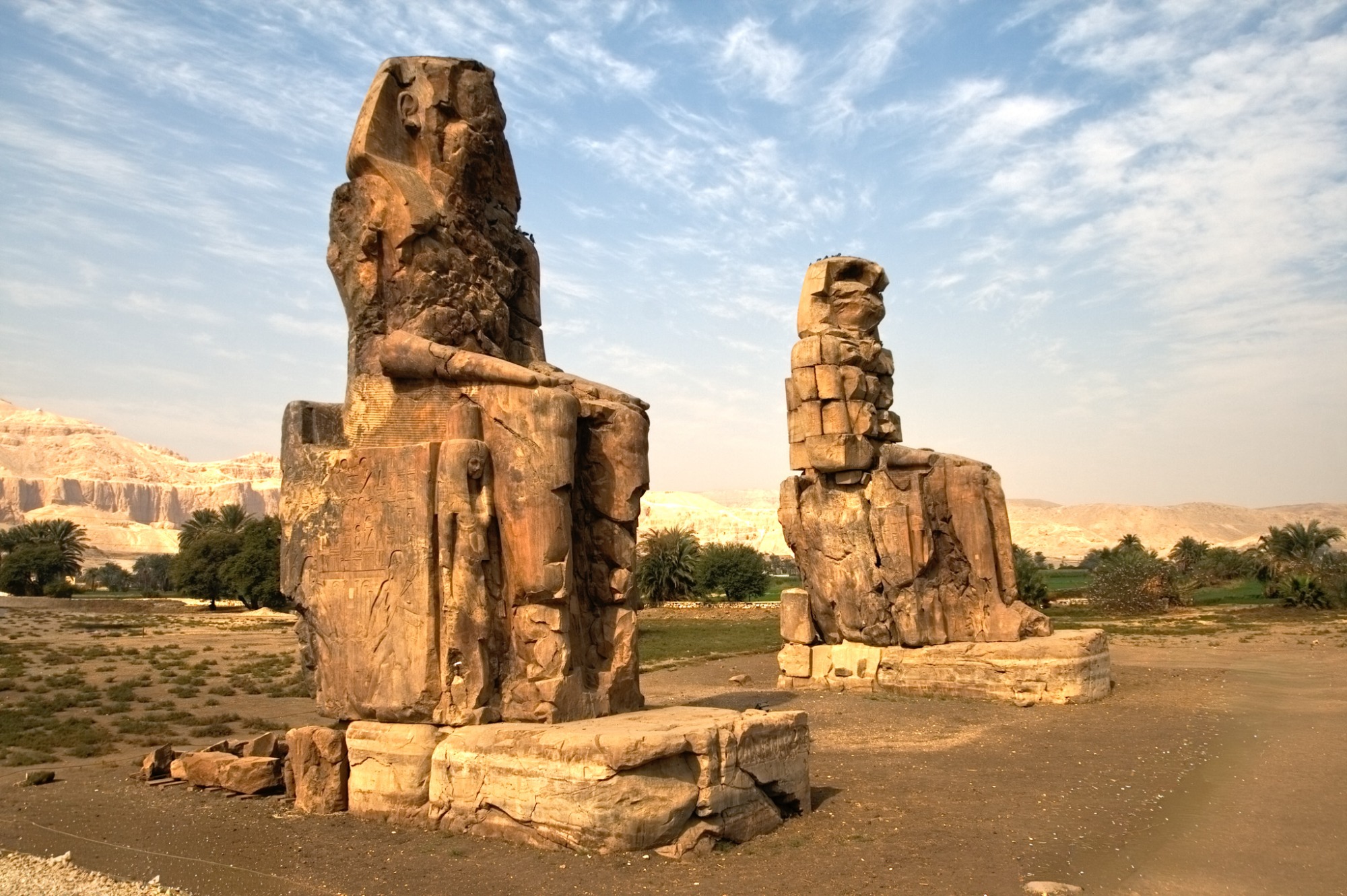
The Colossi of Memnon (Click on to Expand)
Across the Nile from Luxor’s lively East Bank, the West Bank emerges as an open-air museum, its landscapes brushing against desert cliffs and lush fields where history seems to linger with every breeze. Here, tombs and monuments stand as silent witnesses to the grandeur of Egypt’s ancient rulers and nobles.
The Valley of the Kings is perhaps the most celebrated site, its arid hills concealing the final resting places of pharaohs like Tutankhamun, Seti I, and Ramses VI. Within these tombs, vibrant wall paintings and intricate hieroglyphs illuminate ancient beliefs about immortality and the journey through the underworld. Each chamber tells a unique story, inviting travellers to step into the mysteries of the past.
Nearby, the Valley of the Queens promises a quieter but equally enchanting experience. The tomb of Queen Nefertari is renowned for its exquisitely preserved artwork—vivid colours and delicate details bring royal devotion and myth vividly to life. Scattered throughout the valley are the tombs of princes and princesses, each brimming with their own artistry and character.
The West Bank is also home to Egypt’s monumental mortuary temples. The Temple of Hatshepsut rises in terraces against the dramatic cliffs of Deir el-Bahari, its colonnades and reliefs celebrating one of Egypt’s most remarkable female pharaohs. In the early morning, its unique architecture is bathed in golden light—a vista best enjoyed from above by hot air balloon, as the sunrise reveals the full grandeur of the Theban necropolis. Balloon rides offer an unforgettable bird’s-eye perspective, drifting quietly over the patchwork of temples, villages, and cultivated fields, with the Nile glinting in the distance and the mountains framing the horizon.
Not far away, the twin Colossi of Memnon stand as ancient sentinels, their weathered faces echoing legends told to dawn’s first visitors. The Ramesseum, dedicated to Ramses II, displays monumental statues and fallen colossi among its ruins, while Medinet Habu, the mortuary temple of Ramses III, is famed for its towering pylons, colourful battle reliefs, and tranquil courtyards.
Adding further depth to any exploration is Howard Carter’s house, now a museum dedicated to the famed British archaeologist who discovered Tutankhamun’s tomb. The house preserves Carter’s workspace, personal items, and fascinating artefacts from his years in Egypt, offering visitors a tangible link to the excitement and challenges of early archaeological discovery.
From the thrill of ballooning at dawn to walking through ancient halls and paying homage to the pioneers who unveiled Egypt’s secrets, Luxor’s West Bank offers a tapestry of experiences that weave together majesty, mystery, and adventure.
Area Highlights:
- Valley of the Kings
- The Temple of Hatsheput
- The Temple of Medinet Habu
- Colossi of Memnon
Dendera and Abydos
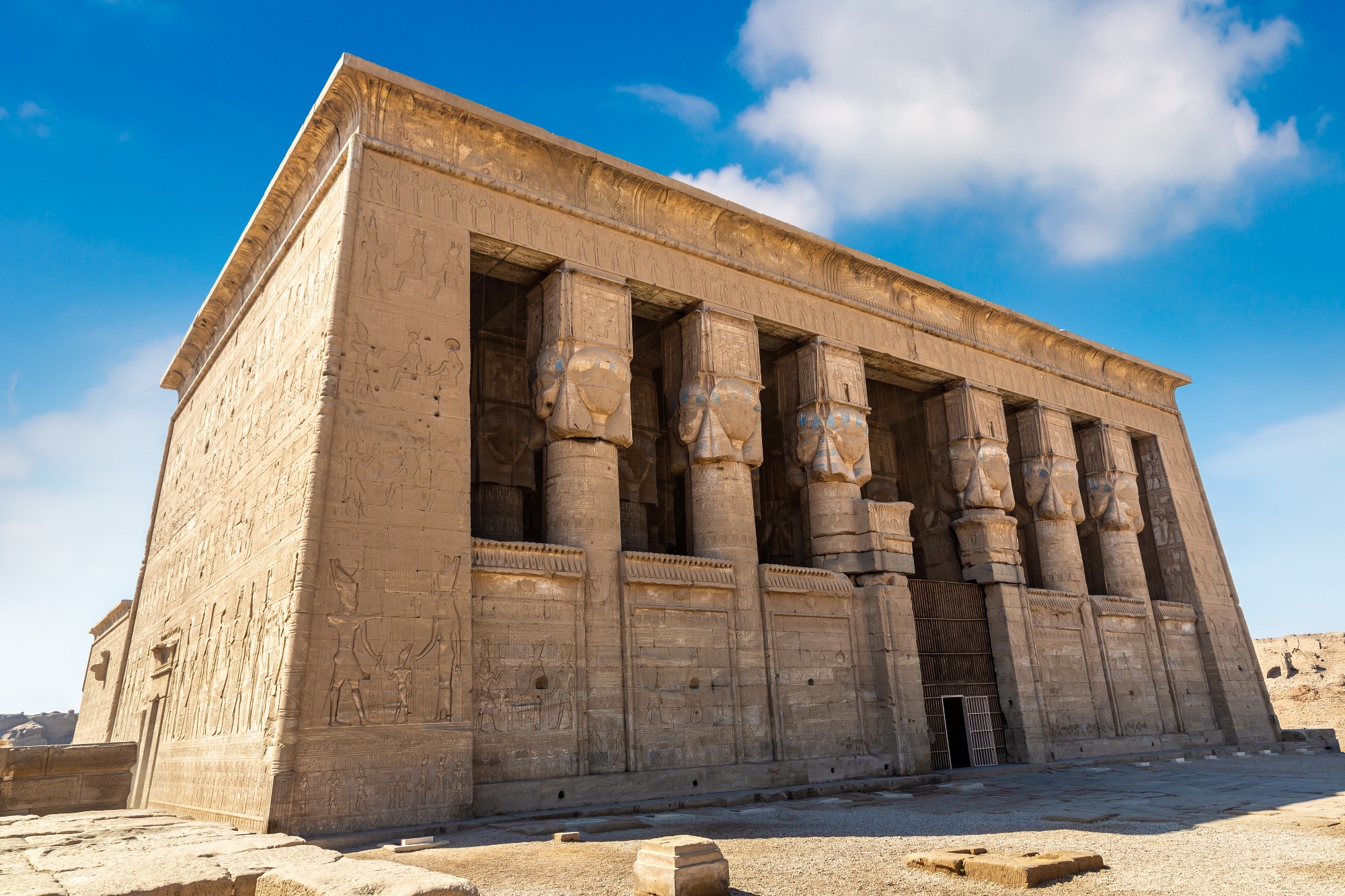
Temple at Dendera (Click on to Expand)
To the north of Luxor, the temples of Dendera and Abydos beckon travellers with their own unique splendour and significance. The Temple of Dendera, dedicated to Hathor—the goddess of love, music, and joy—boasts one of Egypt’s best-preserved sanctuaries. Its grand hypostyle hall enchants with vibrant astronomical ceilings, striking bas-reliefs, and enigmatic depictions such as the famed Dendera Zodiac. Here, visitors can marvel at vivid colours and finely detailed carvings that have survived millennia, offering a rare glimpse into ancient rituals and celestial beliefs.
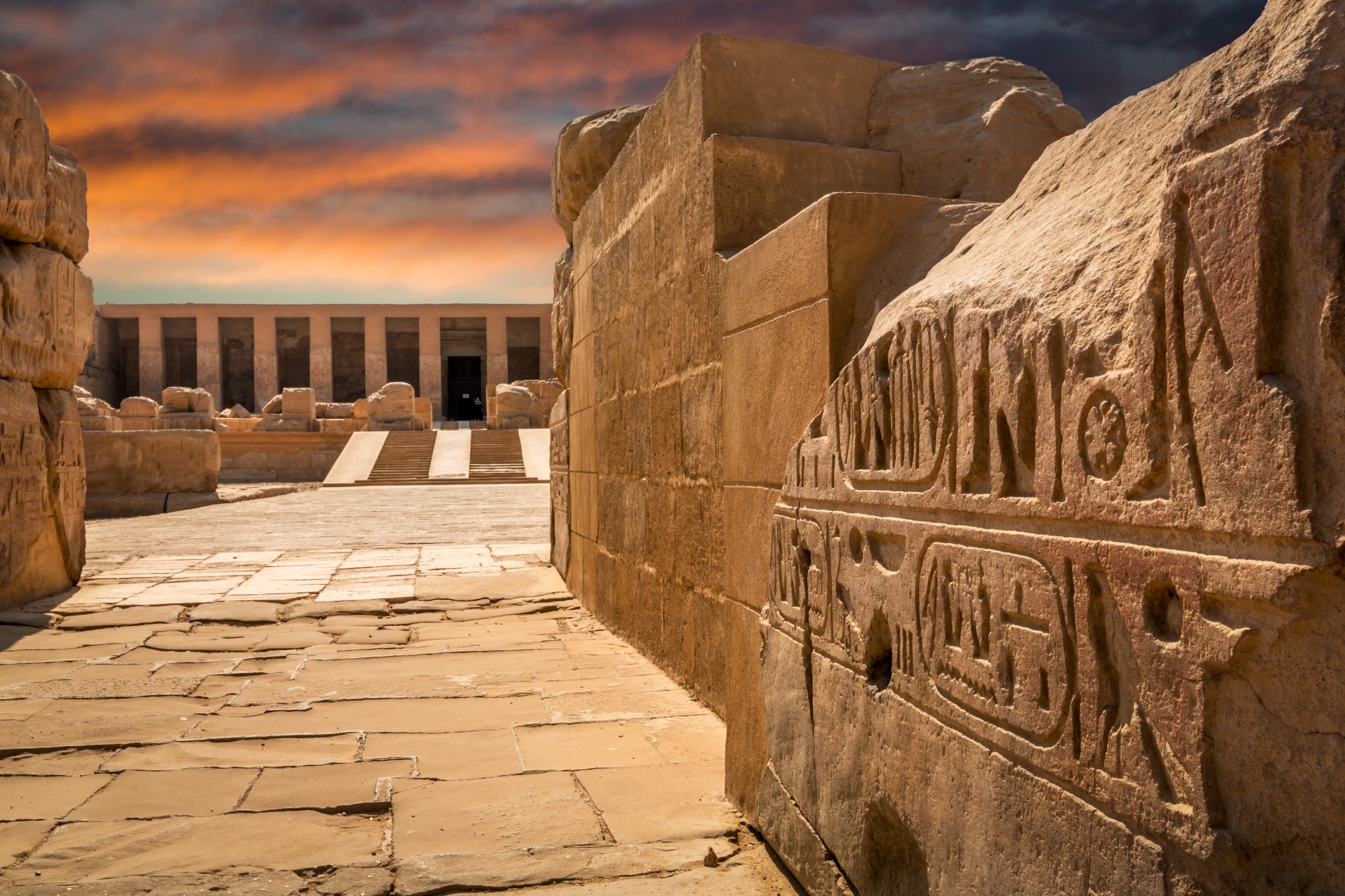
Further north, the Temple of Abydos stands as a revered centre of pilgrimage, renowned for its sacred connection to Osiris, god of the afterlife. The temple’s walls are adorned with intricate carvings, including the celebrated King List—an invaluable chronicle of Egypt’s rulers. Abydos is a place where myth and history intertwine; its sanctuaries and chapels evoke the spiritual heart of ancient Egypt, while the artistry of its reliefs continues to captivate historians and travellers alike.
Visiting Dendera and Abydos offers a chance to experience Egypt’s cultural heritage away from the crowds, in settings both tranquil and evocative. These temples not only showcase extraordinary architectural and artistic achievements but also provide profound insight into the spiritual world of the pharaohs. For anyone seeking to deepen their understanding of ancient Egypt, a journey to Dendera and Abydos is both rewarding and unforgettable.
Area Highlishts:
- Temple of Dendera
Temple at Abydos (Click on to Expand)
The White and Black Deserts
The White Desert (Click on to Expand)
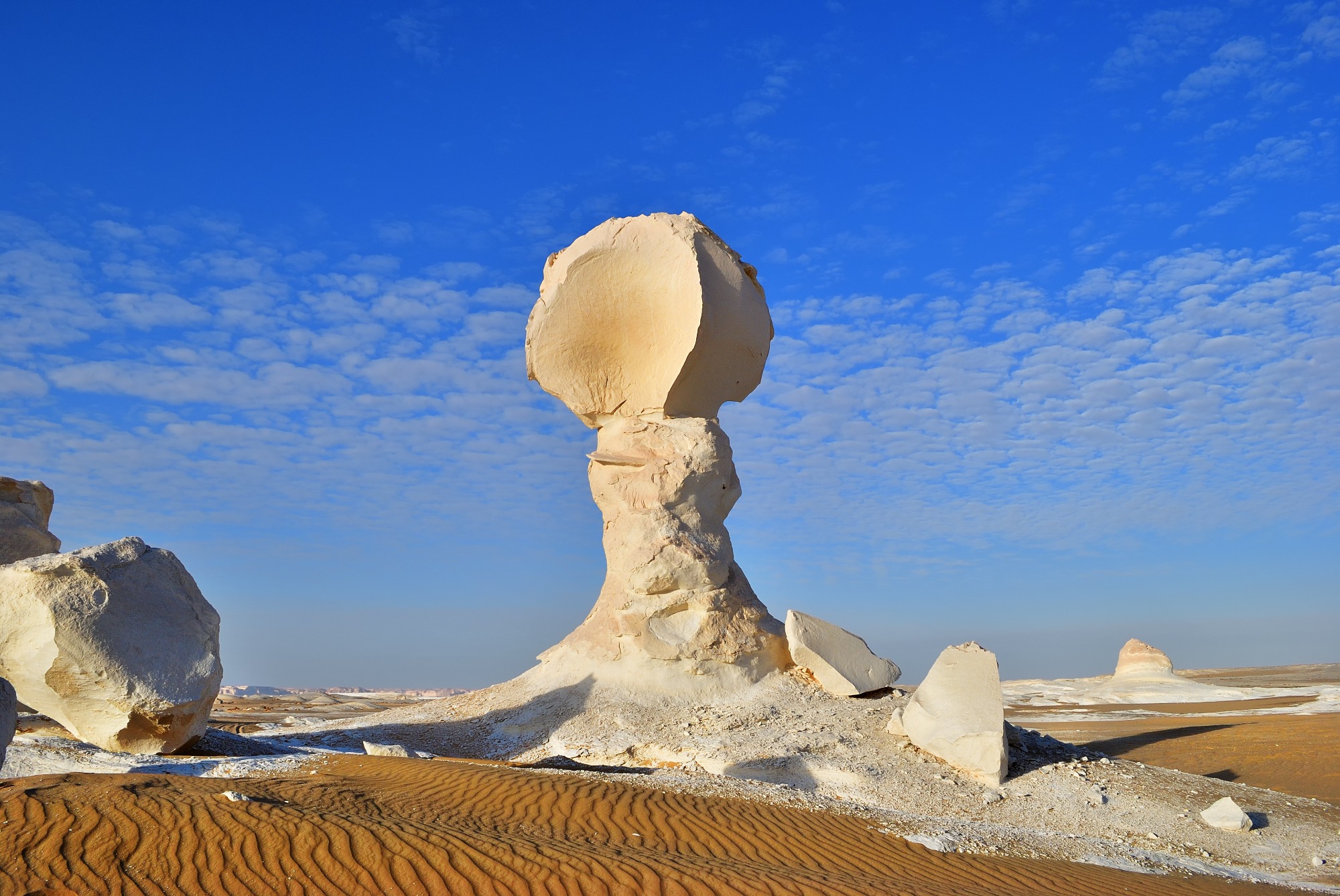
Nestled deep in Egypt’s Western Desert, far from the bustle of the Nile and the resorts of the Red Sea, the White and Black Deserts stand as two of the country’s most mesmerizing natural wonders. The White Desert, known locally as Sahara el Beyda, reveals a surreal landscape that feels more like a dream than reality. Here, brilliant chalk-white rock formations rise from the golden sand, sculpted by centuries of wind into fantastical shapes—some resembling giant mushrooms, others like icebergs stranded in a sea of ochre. As the sun shifts across the sky, the rocks glow with a palette of pearly whites and soft ambers, casting long shadows that stretch into the emptiness. This otherworldly terrain is a haven for photographers, artists, and adventurers seeking a setting unlike any other on Earth.
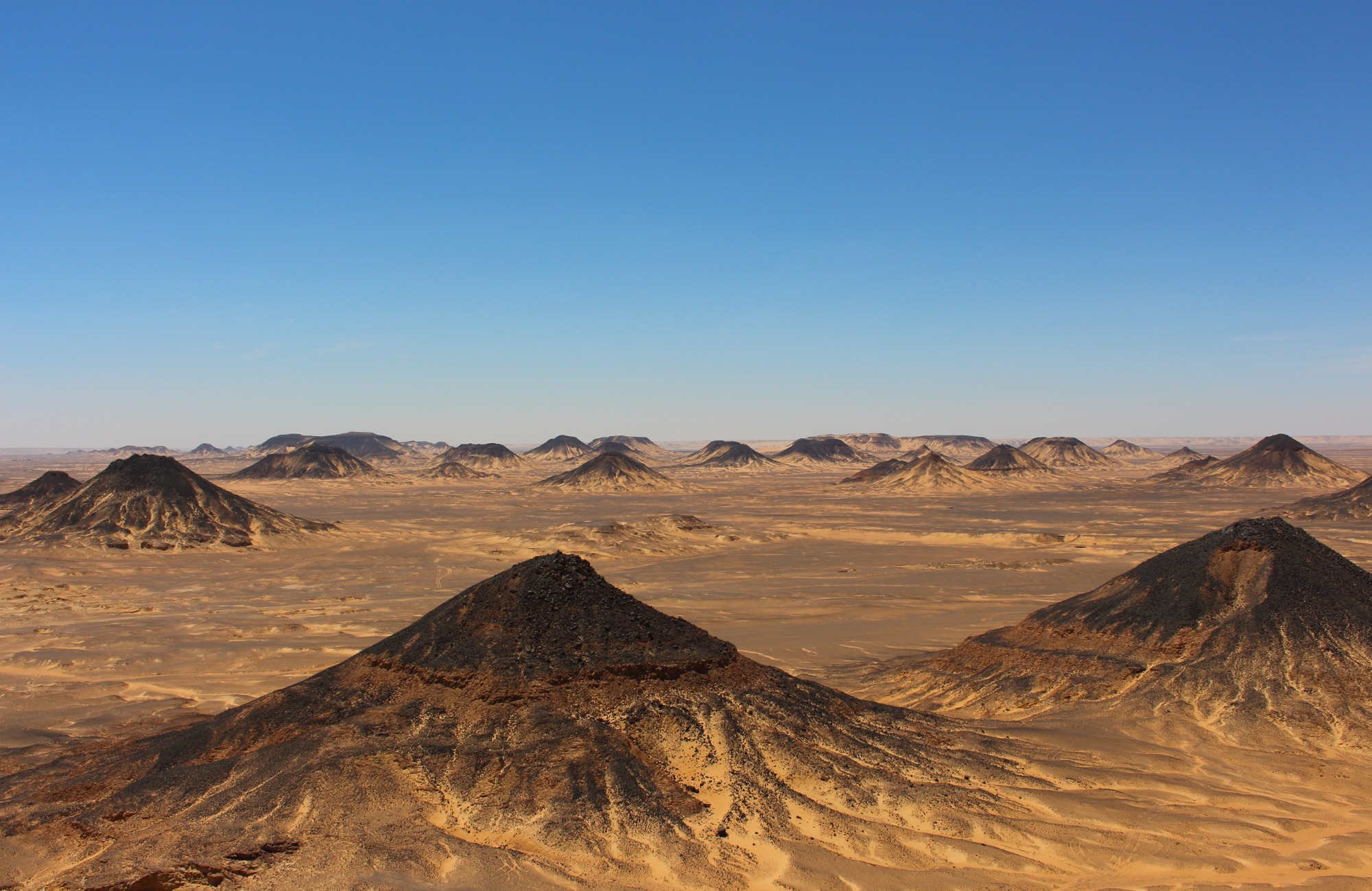
In striking contrast, the nearby Black Desert offers a landscape born of ancient volcanic activity. Its rolling hills are capped with a layer of dark basalt, giving the sand a dusky appearance and lending the land a brooding, mysterious beauty. The hills and mounds of the Black Desert are scattered across the horizon, their dark peaks rising against the pale backdrop of the Western Desert, creating a landscape that feels both timeless and untamed.
Travelling to these deserts is an adventure in itself. Most journeys begin in Cairo, from which travellers embark on a several-hour drive west to the Bahariya Oasis, the main jumping-off point for desert expeditions. From Bahariya, experienced guides in sturdy 4x4 vehicles navigate the remote and unmarked tracks that wind into the heart of the desert. Many travellers choose tours that include overnight camping—an experience that immerses you in the silence of the dunes and the brilliance of the desert night sky.
A visit to the White and Black Deserts is not simply about sightseeing; it’s an invitation to experience Egypt’s wild heart. Here, you can marvel at Crystal Mountain, a ridge glittering with quartz crystals, or share a meal cooked over an open fire with local Bedouin guides, whose knowledge of the desert brings its stories to life. Adventurous souls may try sandboarding down the dunes or hiking amidst the strange rock formations, while all who come are rewarded with unforgettable sunsets, star-drenched nights, and a deep sense of tranquillity found only in such vast, untouched spaces.
Although the environment may seem inhospitable, it is not devoid of life. If you are lucky and observant, you might spot desert foxes or the elusive fennec, as well as several species of birds, most active at dawn and dusk.
The Black Desert (Click on to Expand)
Further Information:
Tours and Detailed Information on Places to Visit and Major Sites of Interest
Should you have any questions please feel free to either call us on 0800 654 6364, email us at info@globalencounter.co.uk or request further information using the link below :
Illustrated Tours and Excursions

All tours provided by Global Encounter Limited are 100% fully bonded to guarantee your financial protection
And to help you find your way around: an interactive Map of Luxor